







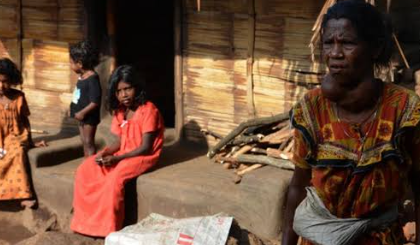
Context:As the Census enumeration exercise gets underway, growing concerns have emerged over the preservation and official recognition of Kurumba, a language spoken by Kerala’s small Adivasi Kurumba community.
Kurumba Community of Kerala
The Kurumba community is one of Kerala’s indigenous Adivasi communities, known for its distinctive oral traditions, forest-based livelihoods, traditional governance institutions and close relationship with the ecology of the Western Ghats.
1. Identity and geographical distribution
-
Indigenous identity: The Palu Kurumbas are recognised as one of the five Particularly Vulnerable Tribal Groups (PVTGs) in Kerala.
-
Distinct identity: They are locally known as Palu Kurumbas, distinguishing them from the Alu Kurumbas of the Nilgiris.
-
Population and status: They constitute one of the smallest and traditionally most isolated tribal communities of Attappady.
-
Habitat: Primarily inhabit 19 traditional tribal hamlets, known as Oorus, in the Attappady Valley of Palakkad district, Kerala.
-
Ecological setting: Their settlements lie within the Nilgiri Biosphere Reserve landscape, associated with the Bhavani and Siruvani river catchments.
2. Origin and historical background
-
Early inhabitants: Considered among the earliest indigenous inhabitants of the Attappady Valley and the Nilgiri foothills.
-
Traditional isolation: Historically inhabited relatively isolated forest regions, maintaining distinct cultural and social practices.
-
Forest-based economy: Traditionally depended on shifting cultivation (Punam), hunting, gathering and forest produce collection.
-
Ecological relationship: Developed extensive traditional knowledge of forest ecosystems, biodiversity, medicinal plants and seasonal cycles.
3. Distinctive cultural and social characteristics
A. Language and oral traditions
-
Speak Kurumba, a Southern Dravidian tribal language without an independent writing system.
-
Knowledge, folklore, songs, rituals and customary practices are transmitted orally across generations.
-
Migration, formal schooling in dominant languages and generational changes have increased the risk of language erosion.
-
Community-led documentation and mother-tongue-based education are important for safeguarding linguistic heritage.
B. Traditional governance system
The community follows the traditional Ooru (hamlet) governance system.
|
Traditional position |
Role |
|---|---|
|
Mooppan |
Traditional village head |
|
Kuruthala |
Deputy or assistant to the Mooppan |
|
Vandari |
Treasurer |
|
Mannukkaaran |
Associated with agricultural and ritual responsibilities |
These institutions reflect customary self-governance, collective decision-making and traditional conflict-resolution mechanisms.
C. Religious beliefs and spiritual practices
-
Follow nature- and ancestor-centred belief systems.
-
Revere forests, hills, rivers and ancestral spirits.
-
Important traditional deities include Malleeshwaran, Karadaivam and Eriyudayavan.
-
Their spiritual practices reflect the close relationship between indigenous cosmology and the natural environment.
D. Festivals and customs
-
Celebrate traditional festivals such as Bethe, Vithuda and Kambalam, associated with agricultural cycles and community traditions.
-
Practise distinctive funeral and burial customs known as Saavu, which may involve placing personal belongings alongside the deceased.
E. Traditional livelihood and food systems
-
Depend on forest-based livelihoods, including the collection of non-timber forest produce (NTFP).
-
Important forest products include wild honey, medicinal plants, resins and bamboo.
-
Traditionally cultivate indigenous millets and other crops.
-
Possess valuable ethnobotanical knowledge concerning medicinal plants, forest foods and natural resources.
4. Significance of the Kurumba Community
-
Biodiversity conservation: Their traditional ecological knowledge contributes to the conservation of Western Ghats biodiversity.
-
Agrobiodiversity: Preservation of indigenous millet varieties and traditional farming practices supports crop diversity and climate resilience.
-
Ethnobotanical knowledge: Their understanding of medicinal plants and forest resources represents an important repository of indigenous knowledge.
-
Cultural heritage: Oral narratives, songs, rituals and customary institutions form an important part of India’s intangible cultural heritage.
-
Sustainable forest management: Their traditional practices demonstrate the potential of community-based natural resource management.
5. Major challenges facing the community
-
Linguistic marginalisation: Lack of a dedicated script and limited institutional documentation threaten intergenerational language transmission.
-
Cultural assimilation: Exposure to dominant languages and external cultural influences may weaken traditional practices.
-
Livelihood insecurity: Restrictions on forest access, declining availability of forest produce and changing livelihood patterns affect traditional occupations.
-
Educational barriers: Language differences between home and school can affect early learning and educational participation.
-
Socioeconomic vulnerability: Limited access to healthcare, education, infrastructure and stable livelihood opportunities.
-
Loss of traditional knowledge: Declining transmission of indigenous agricultural, medicinal and ecological knowledge.
6. Government initiatives and institutional relevance
|
Initiative |
Relevance |
|---|---|
|
PVTG Development Mission |
Targeted development and protection of Particularly Vulnerable Tribal Groups |
|
PM-JANMAN (2023) |
Focuses on improving basic facilities and socioeconomic conditions of 75 PVTGs across India |
|
Dharti Aaba Janjatiya Gram Utkarsh Abhiyan (2024) |
Addresses infrastructure and service-delivery gaps in tribal-majority villages |
|
Forest Rights Act, 2006 |
Recognises individual and community forest rights, including customary rights of eligible forest-dwelling communities |
|
Scheme for Protection and Preservation of Endangered Languages (SPPEL) |
Supports documentation and preservation of endangered Indian languages through institutional research |
|
National Education Policy, 2020 |
Emphasises mother-tongue or home-language-based education, particularly in the foundational years |
Important institutional distinction:
-
SPPEL is a Ministry of Education-supported initiative implemented through the Central Institute of Indian Languages (CIIL), Mysuru.
-
PM-JANMAN is particularly relevant because Kurumbas are among the PVTG communities in Kerala.
-
The Forest Rights Act provides an important framework for protecting the customary relationship between eligible tribal communities and forest resources.
UPSC perspective: Why is the Kurumba language important?
The ongoing Census enumeration exercise raises an important question about the visibility of small indigenous languages.
-
Census recognition: Accurate recording of mother tongues is important for making linguistically marginalised communities visible in official statistics and policy planning.
-
Language endangerment: Languages without established writing systems are particularly dependent on oral transmission.
-
Cultural identity: Language carries indigenous knowledge, collective memory, folklore, traditional ecological practices and community identity.
-
Inclusive governance: Linguistically sensitive education and administration can improve tribal participation in public institutions.
-
Intergenerational transmission: Community participation is essential to ensure that younger generations continue to speak and preserve their ancestral language.
Way forward
-
Document Kurumba vocabulary, folklore, oral histories, songs and traditional knowledge through community-led initiatives.
-
Promote mother-tongue-based multilingual education in tribal areas.
-
Train community members as language researchers and cultural resource persons.
-
Strengthen the role of CIIL and universities in documenting endangered languages.
-
Protect traditional livelihoods and community rights over forest resources.
-
Integrate indigenous ecological knowledge into biodiversity conservation programmes, with appropriate safeguards against exploitation of traditional knowledge.
-
Ensure that Census enumeration accurately captures smaller tribal languages and mother-tongue identities.
KEY POINTS TO REMEMBER FOR UPSC PRELIMS
-
Particularly Vulnerable Tribal Groups (PVTGs)
-
India has 75 PVTGs across 18 states and one Union Territory.
-
They were earlier known as Primitive Tribal Groups (PTGs).
-
The category was introduced in 1973.
-
The criteria traditionally include:
-
Pre-agricultural level of technology.
-
Low level of literacy.
-
Economic backwardness.
-
Declining or stagnant population.
-
Kurumba-related keywords
-
State: Kerala.
-
Region: Attappady Valley.
-
District: Palakkad.
-
Language: Southern Dravidian.
-
Settlement: Ooru.
-
Traditional head: Mooppan.
-
Livelihood: Forest-based collection and traditional agriculture.
-
Ecological region: Western Ghats.
-
-