



Why in News?
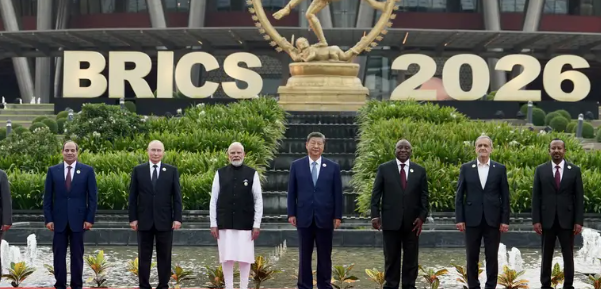
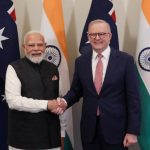
Ahead of the 18th BRICS Summit in New Delhi, Chinese Ambassador Xu Feihong proposed the ‘POWER’ framework for a Greater BRICS, emphasizing stronger Global South cooperation, enhanced India-China coordination, and joint efforts on AI and resilient supply chains.
What does POWER stand for?
- P – Principle: Respect for sovereignty, sovereign equality, non-interference and the UN Charter; greater voice for developing countries in global governance.
- O – Openness: Protect the multilateral trading system and WTO; oppose protectionism and excessive trade barriers; strengthen cooperation in energy, infrastructure and critical minerals.
- W – Win-Win Development: Keep development at the centre of BRICS cooperation through SDGs, local-currency trade, cross-border payments and stronger financial cooperation.
- E – Engine of Growth: Promote cooperation in AI, digital infrastructure, green technology and advanced manufacturing. BRICS has already identified AI governance and digital cooperation as key areas of its agenda.
- R – Responsibility: Use consecutive Indian (2026) and Chinese (2027) presidencies to ensure continuity and push for reforms in institutions such as the IMF, World Bank and UN Security Council.
Key Data
- Demographic Weight: BRICS members together account for nearly half of the world’s population, giving the grouping a vast consumer market and workforce.
- Economic Strength: The expanded BRICS represents a significant share of global GDP, with its PPP-based contribution exceeding one-third of the world economy. Its growth prospects also remain stronger than those of the G7.
- Trade Significance: BRICS countries account for a substantial share of global trade and have a strong presence in strategic sectors such as electronics, steel, agriculture and critical minerals.
- India-China Normalisation: Recent improvement in India-China ties has been reflected in the resumption of direct commercial flights and border trade, signalling gradual efforts toward restoring economic and people-to-people connectivity.
ABOUT BRICS
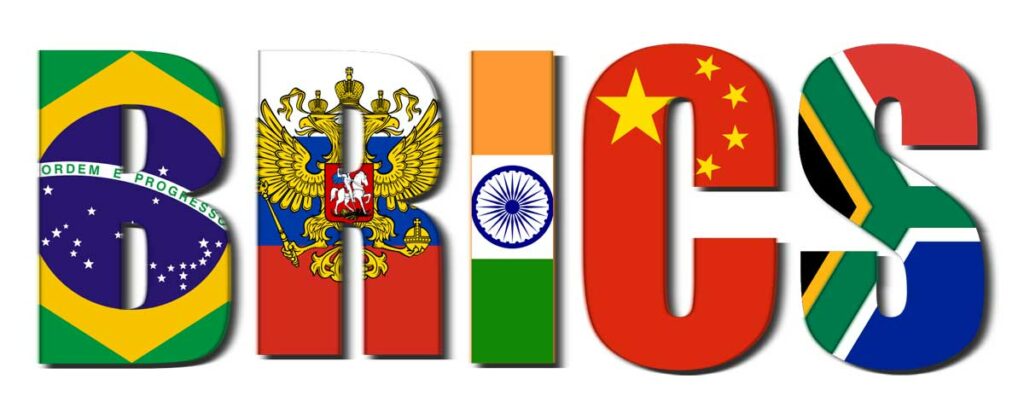
- Origin: BRICS began as BRIC (Brazil, Russia, India and China) in 2009; South Africa joined in 2010, making it BRICS.
- Nature: It is an informal, consensus-based grouping, rather than a treaty-based international organization with a permanent secretariat.
- Membership: The grouping has expanded significantly, bringing together major economies from Asia, Africa, the Middle East and Latin America.
- Core objective: To strengthen economic, political and diplomatic cooperation among emerging economies and enhance the voice of the Global South.
- Global governance: BRICS advocates reform of institutions such as the UN, IMF, World Bank and WTO to make global decision-making more representative.
- Economic cooperation: Focus areas include trade, investment, development finance, infrastructure, energy and technology.
- New Development Bank (NDB): Established in 2015 to finance infrastructure and sustainable-development projects in member and other developing countries.
- Contingent Reserve Arrangement (CRA): Provides a financial safety net to help members address short-term balance-of-payments and liquidity pressures.
- De-dollarisation: BRICS encourages greater use of local currencies and alternative payment mechanisms, although it does not currently have a common currency.
- Global South platform: Its growing membership gives it substantial demographic, economic and geopolitical weight, strengthening its role as a platform for developing countries.
- Decision-making: Major decisions are generally taken through consensus, which promotes inclusiveness but can also slow collective action.
- India’s significance: India uses BRICS to advance strategic autonomy, Global South priorities, multilateral reform and diversified international partnerships.
Significance
- Strengthens Global South voice in global governance and challenges the concentration of power in traditional institutions.
- Promotes strategic autonomy by encouraging greater cooperation among emerging economies.
- Boosts economic resilience through local-currency trade, cross-border payments and diversified supply chains.
- Encourages technological cooperation in AI, digital infrastructure and green technologies.
- Supports multipolarity by pushing for reforms in the IMF, World Bank and UN Security Council.
- Provides scope for India-China engagement, especially through consecutive BRICS presidencies.
- Reduces vulnerability to external shocks by promoting cooperation in critical minerals, energy, agriculture and manufacturing.
Challenges
- India-China strategic differences and unresolved border issues may limit deeper cooperation.
- Unequal trade relations, particularly India’s trade deficit with China, challenge the idea of “win-win” economic cooperation.
- Diverse interests among BRICS members make consensus on geopolitical and economic issues difficult.
- De-dollarisation remains challenging due to differences in currencies, financial systems and capital controls.
- Risk of BRICS becoming an anti-Western bloc could undermine India’s preference for strategic autonomy and issue-based cooperation.
- Weak institutionalisation and the consensus-based nature of BRICS can make implementation of ambitious proposals difficult.
Way Ahead
- Deepen India-China coordination: Use the consecutive BRICS presidencies of India (2026) and China (2027) to advance a shared Global South agenda, while maintaining dialogue and de-escalation along the border.
- Strengthen financial mechanisms: Enhance the capacity of the New Development Bank (NDB) and promote interoperable cross-border payment systems, including greater linkages between CBDCs and platforms such as UPI.
- Promote responsible AI governance: Develop transparent, inclusive and human-centric frameworks for AI while ensuring that developing countries have equitable access to emerging technologies.
- Diversify critical supply chains: Build resilient intra-BRICS partnerships in critical minerals, fertilizers, renewable energy and other strategic sectors to reduce dependence on vulnerable external supply chains.
- Push for multilateral reforms: Coordinate efforts to reform the IMF and World Bank voting structures and seek greater representation of developing countries in the UN Security Council.
Conclusion
The real challenge for BRICS lies in turning political convergence into practical cooperation. Managing India-China differences, addressing economic asymmetries and maintaining unity among diverse members will be crucial. If based on sovereign equality, mutual economic interests and effective institution-building, BRICS can strengthen the voice of the Global South and contribute to a more inclusive, balanced and multipolar global order.
UPSC MAINS PRACTICE QUESTIONS:
Q1. “BRICS has emerged as an important platform for advancing the interests of the Global South.” Discuss. (150 words) (10 marks)
Q2. The expansion of BRICS has increased its global influence but also created challenges of internal cohesion. Discuss. (150 words) (10 marks)
Q3.The success of BRICS as an alternative platform for global economic governance depends substantially on India-China relations. Critically examine. (250 words) (15 marks)
Sources : Chinese Embassy in India — Xu Feihong, “Harnessing BRICS ‘POWER’ to empower the world”, published in The Hindu, September 7, 2026.