







Why in News?
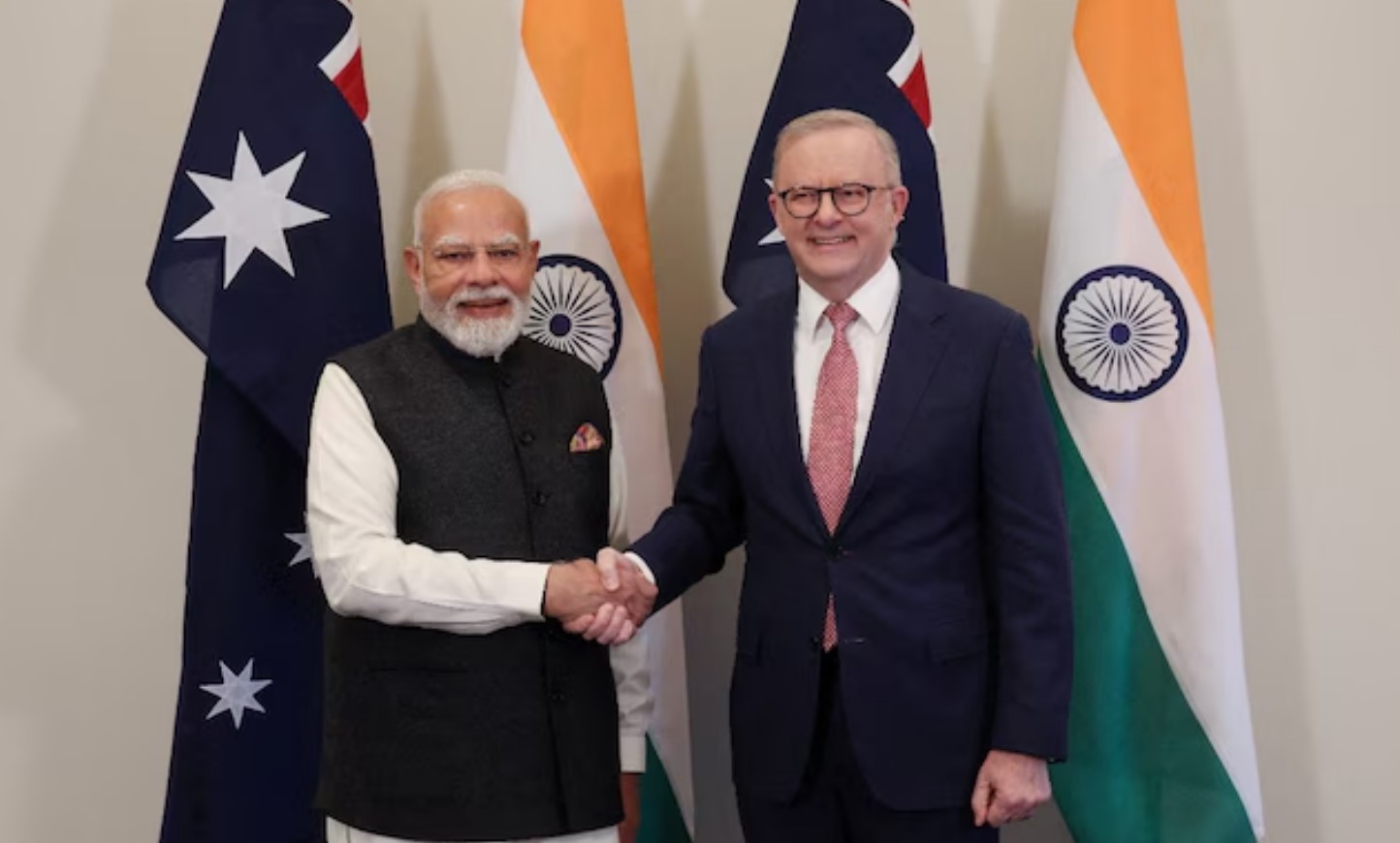
India and Australia have announced the Australia–India Partnership on Cyber, Critical Technologies and Supply Chains (PACTS), replacing the 2020 Framework Arrangement on Cyber and Cyber Enabled Critical Technology Cooperation. The new framework seeks to deepen bilateral cooperation in cyber security, critical technologies, resilient supply chains, digital infrastructure, and defence research under the broader Comprehensive Strategic Partnership (CSP).
Context
- India and Australia elevated their relationship to a Comprehensive Strategic Partnership (CSP) in 2020.
- Both countries are key partners in the Indo-Pacific and members of the Quad (India, Australia, Japan, and the United States).
- Growing geopolitical competition, supply chain disruptions, cyber threats, AI governance, and emerging technologies have necessitated a broader and more integrated cooperation framework.
- PACTS succeeds the 2020 cyber cooperation framework by expanding collaboration beyond cybersecurity to include critical technologies, digital resilience, and defence innovation.

WHAT IS PACTS?
The Partnership on Cyber, Critical Technologies and Supply Chains (PACTS) is a comprehensive bilateral framework designed to:
- Enhance national and regional security.
- Build resilient and trusted supply chains.
- Promote responsible and secure technology development.
- Strengthen cyber resilience.
- Support innovation and research.
- Offer trusted digital alternatives to Indo-Pacific partners.
The partnership is guided by principles of:
-
- Safety
- Security
- Resilience
- Inclusivity
- Democratic values
- Responsible technology leadership
Objectives of PACTS :
- Strengthen cyber cooperation between India and Australia.
- Build secure and diversified technology supply chains.
- Promote research and innovation in emerging technologies.
- Develop trusted digital infrastructure across the Indo-Pacific.
- Enhance defence science collaboration.
- Foster greater investment and commercial partnerships in critical technologies.
FIVE PILLARS OF COOPERATION:
-
Supply Chain Resilience and Diversification
Focus Areas
- Secure and trusted technology supply chains.
- Trusted vendor frameworks.
- Semiconductor ecosystem.
- Critical minerals.
- Undersea cable security.
- Trade diversification.
Key Initiatives
- Develop bilateral trusted vendor mechanisms.
- Cooperation under the Quad Partnership for Cable Connectivity and Resilience.
- Joint research on semiconductor supply chain security.
- Collaboration in critical minerals, including recycling and recovery.
- Strengthening commercial partnerships and technology trade.
Importance
- Reduces dependence on single-country supply chains.
- Enhances economic security.
- Supports resilient Indo-Pacific connectivity.
-
Critical Technologies
Priority Areas
- Artificial Intelligence (AI)
- Telecommunications
- Biotechnology
- Space technologies
- Advanced materials
Major Proposals
- Develop international standards for trustworthy AI.
- Share approaches on AI compute, Large Language Models (LLMs), and AI infrastructure.
- Expand joint research between universities and industries.
- Encourage government-led and commercial collaboration in the space sector.
Significance
- Supports secure innovation.
- Promotes ethical AI governance.
- Strengthens technological competitiveness.
-
Cybersecurity
Areas of Cooperation
- Counter cybercrime.
- Protect critical infrastructure.
- Strengthen cyber diplomacy.
- Improve cyber capacity building.
Key Measures
- Create a unified bilateral cyber cooperation mechanism.
- Coordinate in UN cyber processes.
- Enhance dialogue on data governance.
- Conduct joint cybersecurity workshops.
- Establish a Cyber Tech Skill Incubator Hub.
Importance
- Improves cyber resilience.
- Builds skilled cybersecurity workforce.
- Facilitates business collaboration in cybersecurity.
-
Digital Resilience
Focus
- Promote trusted Digital Public Infrastructure (DPI).
- Support digital transformation in Indo-Pacific countries.
Key Initiatives
- Share India’s Digital Public Infrastructure (DPI) model.
- Scale affordable digital solutions.
- Collaborate on health, education, renewable energy, connectivity, and governance.
- Build locally adaptable digital ecosystems.
Importance
- Expands India’s digital diplomacy.
- Supports inclusive development.
- Strengthens regional digital connectivity.
-
Defence Research Collaboration
Focus Areas
- Defence science.
- Maritime technologies.
- Defence innovation.
- Startup collaboration.
Major Initiatives
- Strengthen Defence Ministers’ Dialogue.
- Expand cooperation between:
- Australia’s Defence Science and Technology Group (DSTG)
- India’s Defence Research and Development Organisation (DRDO)
- Promote defence startup ecosystems.
- Joint research on maritime surveillance and advanced materials.
Importance
- Improves defence innovation.
- Enhances maritime security.
- Supports indigenous defence technologies.
GOVERNANCE STRUCTURE :
Bilateral Chairs
India
- Deputy National Security Advisor
Australia
- Deputy Secretary, International and Security Group, Department of the Prime Minister and Cabinet
Annual Senior Officials Meeting
Functions include:
- Reviewing progress.
- Identifying new projects.
- Assessing emerging cyber and technology risks.
- Coordinating implementation across the five pillars.
INSTITUTIONAL LEADS
| Pillar | India | Australia |
| Supply Chain Resilience | National Security Council Secretariat (NSCS) | Office of the Ambassador for Cyber Affairs and Critical Technology |
| Critical Technologies | NSCS | Office of the Ambassador for Cyber Affairs and Critical Technology |
| Cybersecurity | Cyber Diplomacy Division, Ministry of External Affairs | Office of the Ambassador for Cyber Affairs and Critical Technology |
| Digital Resilience | Oceania Division, Ministry of External Affairs | Office of the Ambassador for Cyber Affairs and Critical Technology |
| Defence Research | Ministry of Defence | Department of Defence |
SIGNIFICANCE FOR INDIA
Strategic
- Deepens Comprehensive Strategic Partnership with Australia.
- Reinforces India’s Indo-Pacific strategy.
- Strengthens Quad cooperation.
Economic
- Diversifies technology and semiconductor supply chains.
- Promotes investments in emerging technologies.
- Enhances critical mineral cooperation for clean energy transition.
Technological
- Accelerates AI and semiconductor research.
- Encourages innovation through academia-industry partnerships.
- Supports indigenous technological capabilities.
Cyber Security
- Enhances preparedness against cyber threats.
- Improves protection of critical infrastructure.
- Builds cybersecurity talent.
Defence
- Expands defence R&D collaboration.
- Strengthens maritime capabilities.
- Promotes defence startups and innovation.
Challenges
- Balancing openness with national security concerns.
- Harmonising technology regulations and standards.
- Protecting intellectual property.
- Managing sensitive data sharing.
- Addressing rapidly evolving cyber threats.
- Ensuring sustained funding and institutional coordination.
Way Forward
- Operationalise the five pillars through time-bound projects.
- Expand collaboration in semiconductors, AI, quantum technologies, and critical minerals.
- Develop common standards for trusted technologies.
- Strengthen industry-academia-government partnerships.
- Enhance capacity building across the Indo-Pacific through Digital Public Infrastructure.
- Regularly review implementation through annual senior officials’ meetings.
UPSC Prelims Facts
- PACTS replaces the 2020 Framework Arrangement on Cyber and Cyber Enabled Critical Technology Cooperation.
- It operates under the India–Australia Comprehensive Strategic Partnership (2020).
- It has five pillars:
- Supply Chain Resilience
- Critical Technologies
- Cybersecurity
- Digital Resilience
- Defence Research Collaboration
- Both countries are members of the Quad.
- India’s Digital Public Infrastructure (DPI) is a major component of the Digital Resilience pillar.
- The partnership emphasizes AI governance, semiconductor security, critical minerals, cyber resilience, and defence technology cooperation.
UPSC Mains Linkage
GS Paper II: India and its bilateral relations; International institutions; Cyber diplomacy; Digital governance.
GS Paper III: Science & Technology; Cyber Security; Critical Technologies; Internal Security; Defence Technology; Supply Chain Resilience; Artificial Intelligence.
Mains Sample Question:
Discuss the significance of the Australia–India Partnership on Cyber, Critical Technologies and Supply Chains (PACTS) in strengthening India’s technological security, resilient supply chains, and strategic role in the Indo-Pacific.