





Why in News?
- The Union Ministry of Health and Family Welfare has notified a crucial amendment to the Drugs Rules, 1945, explicitly withdrawing the licensing exemption previously granted for selling cough syrups in small villages.
- The development comes amid growing concerns over the misuse of medicines, self-medication practices, and the need for greater oversight in India’s rapidly evolving healthcare ecosystem.
- This move is aimed at strengthening pharmaceutical regulation while ensuring uninterrupted access to essential medicines across the country
LEGAL FRAMEWORK :
Schedule K functions under the provisions of the Drugs and Cosmetics Act, 1940, with its operational guidelines prescribed through the Drugs Rules, 1945.
ABOUT SCHEDULE K OF THE DRUGS RULES, 1945
- Schedule K, a component of the Drugs Rules, 1945 framed under the Drugs and Cosmetics Act, 1940, provides exemptions to certain institutions and categories of medicines from specific licensing and sale requirements.
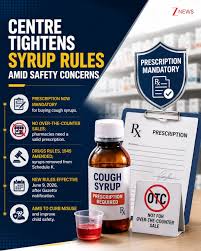
- Prior to this amendment, Entry No. 13 of Schedule K permitted the sale of cough syrups in villages with a population of less than 1,000 without requiring compliance with certain retail sale licensing provisions.
- With the omission of the word “Syrup” from the said entry, this exemption will no longer be available for cough syrups.
- Consequently, the sale and dispensing of cough syrups in smaller villages will now be required to take place only through duly licensed pharmacies in accordance with the provisions of the Drugs and Cosmetics Act, 1940 and the Rules framed thereunder.
- The amendment has been undertaken to strengthen regulatory oversight of syrup formulations and to align the exemption framework with contemporary public health and safety requirements.
- The measure is expected to promote responsible distribution and sale of cough syrups while ensuring greater compliance with regulatory standards across the country.
AIM :
- It is to ensure that essential medicines remain accessible to people living in remote and underserved regions while maintaining adequate safeguards for public health.
- It creates an infrastructure that permits the distribution of common household medicines in rural, remote, or economically isolated areas while allowing the government to dynamically strip away exemptions when a specific drug class presents an emerging public safety or quality control risk.
KEY FEATURES OF SCHEDULE K AND THE RECENT AMENDMENT
Targeted Licensing Exemptions:
Schedule K exempts specified categories of medicines from retail licensing requirements, provided prescribed conditions relating to storage, packaging, and sourcing are met.
Village-Level Exemption:
Earlier, villages with a population below 1,000 could sell certain medicines through local shops without requiring a licensed pharmacist or a retail drug licence.
Removal of Syrup Exemption:
The recent amendment deletes the term “syrup” from the relevant provision, bringing cough syrup formulations under the standard licensing and regulatory framework.
Mandatory Licensed Sale:
As a result, cough syrups can now be sold only through licensed pharmacies operating under the supervision of qualified personnel.
Supply Chain Compliance:
Manufacturers, distributors, wholesalers, and retailers must update their operations to comply with the revised rules and ensure regulated distribution of cough syrup products.
CHALLENGES :
- Reduced Access in Remote Areas: Rural populations may face difficulty accessing cough syrups due to the limited presence of licensed pharmacies.
- Compliance Burden: Small retailers and village stores may struggle to meet licensing requirements, affecting their livelihoods.
- Implementation Gaps: Monitoring and enforcing compliance across dispersed rural supply chains can be administratively challenging.
WAY FORWARD :
- Expand Rural Pharmacy Networks: Encourage the establishment of licensed pharmacies in underserved areas through incentives and support measures.
- Strengthen Awareness and Training: Educate retailers, distributors, and consumers about the revised regulations and their public health rationale.
- Enhance Regulatory Oversight: Use digital tracking and periodic inspections to ensure compliance while maintaining uninterrupted access to essential medicines.
SOURCE : PIB
PYQ (MAINS) :
In a crucial domain like the public healthcare system, the Indian State should play a vital role in containing the adverse impact of marketization of the system. Suggest measures through which the State can enhance the reach of public healthcare at the grassroots level.” (GS2 UPSC 2024)