





1) The Delhi EV Policy 2026
Source : TOI
Subject : GS II – Governance
Context:
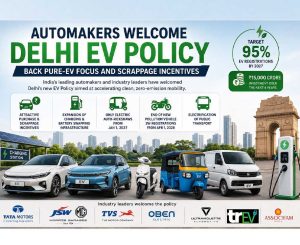
The Delhi government has officially notified the landmark Delhi Electric Vehicle (EV) Policy 2026, introducing ambitious regulatory measures aimed at reducing vehicular pollution and accelerating the transition to cleaner transportation across the national capital.
About the Delhi Electric Vehicle (EV) Policy 2026
What is it?
The Delhi Electric Vehicle (EV) Policy 2026 is a comprehensive roadmap for achieving a zero-emission transport system in the national capital. Effective from 1 July 2026 to 31 March 2030, the policy exclusively promotes Battery Electric Vehicles (BEVs) by providing incentives only for fully electric vehicles, while excluding strong hybrid vehicles from tax exemptions and financial subsidies.
Key Features and Incentives
- Purchase Incentives for Electric Two-Wheelers: Buyers will receive subsidies of ₹30,000 in the first year, ₹20,000 in the second year, and ₹10,000 in the third year.
- Support for Electric Three-Wheelers: Electric auto-rickshaws will be eligible for incentives of ₹50,000, ₹40,000, and ₹30,000 over the first three years, respectively.
- Road Tax and Registration Fee Waiver: Eligible battery electric vehicles will enjoy a 100% exemption from road tax and registration fees. For passenger cars, this benefit is available only for vehicles priced up to ₹30 lakh (ex-showroom).
Why is the Policy Needed?
- Addressing Air Pollution: Delhi’s recurring air quality crisis, especially during winter, necessitates a rapid shift towards zero-emission mobility.
- Electrifying High-Volume Vehicle Segments: Two-wheelers account for nearly two-thirds of Delhi’s vehicle fleet but contribute less than 8% of EV registrations, indicating significant potential for emission reduction.
- Reducing Emissions from Commercial Transport: Goods carriers, delivery vehicles, and auto-rickshaws are major contributors to urban pollution and require faster electrification.
- Promoting Shared Responsibility: Mandatory EV adoption targets for schools, logistics operators, and public transport agencies ensure wider institutional participation in the clean mobility transition.
Important Data
- Commercial goods vehicles contribute around 33% of vehicular pollution in Delhi.
- Two-wheelers and three-wheelers together account for nearly 46% of transport-related emissions.
Major Transition Timelines
- From 1 January 2027: Only electric L5 passenger auto-rickshaws and N1 light goods vehicles will be eligible for new registrations.
- From 1 April 2028: Registration of new petrol and CNG-powered two-wheelers will cease, with only electric models permitted.
- School Bus Electrification: Schools must convert 10% of their fleet within two years, 20% within three years, and 30% by 31 March 2030.
- Digital Subsidy Portal: A paperless portal (evsubsidy.delhi.gov.in) enables online subsidy applications within 30 days of purchase, with Direct Benefit Transfer (DBT) targeted within 60 days.
Key Challenges
- Exclusion of Strong Hybrids: Automobile manufacturers have opposed the denial of incentives for hybrid vehicles, arguing that they can facilitate a gradual transition to full electrification.
- Financial Burden on Low-Income Operators: Auto-rickshaw drivers and delivery operators may face affordability challenges unless supported by accessible financing mechanisms.
- Power Infrastructure Constraints: The rapid expansion of charging infrastructure will require substantial upgrades to Delhi’s electricity distribution network to prevent grid overload.
- Preventing Misuse of Subsidies: Subsidized EVs cannot be sold or registered outside Delhi for three years, ensuring that incentives benefit local users.
Way Forward
- Expand Charging Infrastructure: Accelerate the deployment of the proposed 32,000 public charging points across markets, metro stations, workplaces, and residential areas.
- Ensure Efficient Subsidy Delivery: Strengthen the digital subsidy portal to guarantee timely Aadhaar-authenticated DBT payments.
- Promote Affordable Home Charging: Collaborate with DISCOMs to provide dedicated residential charging connections with concessional off-peak electricity tariffs.
- Support Commercial EV Adoption: Implement incentives such as a 10-year exemption from ‘No Entry’ restrictions for the first 1,000 electric medium-duty trucks.
- Protect Existing Vehicle Owners: Clearly communicate that vehicles registered before the prescribed cut-off dates may continue operating until the expiry of their legally valid registration or fitness certificates.
Conclusion
The Delhi EV Policy 2026 marks a decisive step towards transforming the capital’s transport sector by introducing phased restrictions on fossil-fuel vehicle registrations and incentivising battery electric vehicles. Its long-term success will depend on timely expansion of charging infrastructure, reliable subsidy disbursement, adequate power system upgrades, and financial support for vulnerable vehicle owners, ensuring an equitable and sustainable transition to clean mobility.
UPSC MAINS SAMPLE QUESTION
The Delhi Electric Vehicle (EV) Policy 2026 marks a significant shift towards zero-emission urban mobility through regulatory mandates and financial incentives. Examine the key features of the policy. Discuss its potential benefits for sustainable urban transport as well as the major challenges in its implementation. (15 Marks, 250 Words)
2) The Polygraph Test
Source : Indian Express
Subject : GS III : Science & Technology
Context:
The Pune Police have approached the court seeking permission to conduct a polygraph (lie detector) test on the accused in the Ketan Agarwal murder case. Under Indian law, such tests can only be administered with the voluntary consent of the accused and judicial approval.
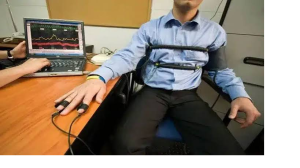
About the Polygraph Test
What is a Polygraph Test?
A polygraph test, commonly known as a lie detector test, is an investigative technique used to measure and record a person’s physiological responses while answering a series of questions. It is based on the premise that deliberate deception may trigger involuntary changes in the body’s autonomic functions, such as breathing, heart rate, blood pressure, and perspiration.
Objective:
The primary purpose of a polygraph test is to assist investigators by generating leads, verifying or challenging a suspect’s statements, and narrowing the scope of an investigation. It is not a conclusive test for determining guilt or innocence.
How Does It Work?
- Pre-Test Interview: The examiner explains the procedure, discusses the case, and familiarizes the subject with the test to minimize unrelated anxiety.
- Baseline Recording: The subject answers simple, non-sensitive questions to establish normal physiological patterns, including breathing, pulse, blood pressure, and skin conductivity.
- Structured Questioning: A combination of irrelevant, control, and case-specific questions is asked to compare physiological responses and identify possible signs of deception.
- Analysis of Responses: The examiner evaluates the recorded physiological data to detect significant deviations that may indicate heightened stress associated with deceptive responses.
Key Components of a Polygraph
- Pneumograph Tubes: Placed around the chest and abdomen to monitor breathing rate and respiratory patterns.
- Cardiovascular Cuff: Records blood pressure, pulse rate, and heart activity throughout the examination.
- Galvanic Skin Response (GSR) Sensors: Attached to the fingers to measure changes in skin conductivity caused by perspiration under stress.
- Photoplethysmograph (PPG): Uses an infrared sensor to detect variations in blood flow and circulation, typically from the finger or earlobe.
Limitations of the Polygraph Test
- Questionable Scientific Accuracy: A polygraph measures physiological stress rather than deception itself, making its reliability scientifically contested.
- Risk of False Results: Anxiety or fear may produce false positives, while trained individuals or habitual liars may suppress physiological responses, leading to false negatives.
- Vulnerability to Countermeasures: Subjects may deliberately manipulate their physiological responses through physical or psychological techniques, reducing the effectiveness of the test.
- Legal and Constitutional Constraints: In Selvi v. State of Karnataka (2010), the Supreme Court of India held that polygraph tests can be conducted only with the voluntary consent of the accused. Further, the test results are generally inadmissible as evidence, except where they lead to the discovery of new facts admissible under Section 27 of the Indian Evidence Act, 1872.
PRELIMS SAMPLE QUESTION
- With reference to Polygraph (Lie Detector) Tests in India, consider the following statements:
- A polygraph test directly detects whether a person is telling the truth or lying.
- Under the Supreme Court’s judgment in Selvi v. State of Karnataka (2010), a polygraph test can be conducted only with the voluntary consent of the person concerned.
- The results of a polygraph test are generally inadmissible as evidence in court, except when they lead to the discovery of facts admissible under Section 27 of the Indian Evidence Act.
Which of the statements given above is/are correct?
(a) 1 only
(b) 2 and 3 only
(c) 1 and 3 only
(d) 1, 2 and 3
3) Battery Management System (BMS)
Source : Indian Express
Subject : GS III (Science & Technology)
Context:
The government has instructed Apple and Google to remove three battery management applications—BAT-BMS, Lossigy, and Epoch Li-ion—from their app stores, citing critical cybersecurity vulnerabilities and potential risks to passenger safety.
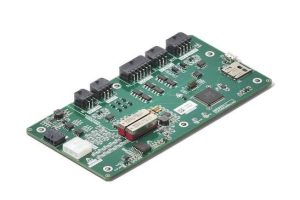
Battery Management System (BMS)
What is a Battery Management System (BMS)?
A Battery Management System (BMS) is an electronic control unit integrated into electric vehicles (EVs) and energy storage systems powered by large-capacity lithium-ion batteries. It functions as the “brain” of the battery pack, continuously monitoring and regulating the performance of individual battery cells to ensure efficiency, reliability, and safety.
Aim:
The primary objective of a BMS is to minimize performance variations among battery cells, enabling them to charge and discharge uniformly while maximizing battery life and operational safety.
How Does a BMS Work?
Continuous Monitoring:
Sensors continuously monitor each cell’s voltage, current, and temperature while calculating the battery’s State of Charge (SoC) and State of Health (SoH) in real time.
Cell Balancing:
When certain cells charge or discharge faster than others, the BMS activates balancing circuits to redistribute or dissipate excess energy, ensuring uniform performance across the battery pack.
Safety Protection:
If the system detects unsafe operating conditions—such as overvoltage, overheating, or excessive current—the BMS activates electronic switches (MOSFETs or relays) to immediately disconnect the charging or discharging circuit, protecting both the battery and the user.
Key Technical Features
- Wireless Diagnostics:
Modern BMSs often incorporate Bluetooth Low Energy (BLE) modules, enabling wireless communication within a range of about 15 metres. Service technicians can access real-time diagnostic data, charging history, battery status, and error logs through dedicated applications. - Thermal Management:
The BMS continuously monitors temperature across the battery pack. If overheating is detected, it reduces power output or activates cooling mechanisms to prevent thermal runaway and fire hazards. - State Estimation (SoC and SoH):
Advanced algorithms estimate the battery’s remaining charge (SoC) and long-term degradation (SoH), supporting efficient energy management and predictive maintenance. - Overcurrent and Short-Circuit Protection:
The system continuously monitors current flow and instantly isolates the battery if it detects abnormal current spikes or short circuits, preventing damage to the battery, motor, and electrical components.
Limitations and Security Vulnerabilities
- Weak Wireless Security:
Many low-cost Bluetooth-enabled BMSs rely on weak authentication or default passwords, making them susceptible to unauthorized access. - Bluetooth-Based Exploitation:
If default credentials remain unchanged, nearby devices (typically within 15 metres) can connect via diagnostic applications and modify critical battery settings, including disabling the discharge function. - Passenger Safety Risks:
Disabling the discharge circuit can instantly cut power to the vehicle’s motor, causing an abrupt loss of propulsion. Such incidents may increase the likelihood of road accidents and pose significant risks to passenger safety.
UPSC MAINS SAMPLE QUESTION
Recent concerns over vulnerabilities in Bluetooth-enabled Battery Management Systems (BMS) have highlighted the convergence of cybersecurity and road safety. Explain the role of a BMS in electric vehicles and examine the security challenges associated with wireless battery management systems. (10 Marks, 150 Words)
4) The Matcha Tea
Source : The Hindu
Subject : Indian Geography
Context:
Marking a significant milestone for India’s tea sector, Assam’s Chota Tingrai Tea Estate in Tinsukia district has successfully cultivated and commercially sold the country’s first Matcha tea.
About Matcha Tea
What it is
Matcha is a high-quality, bright green fine powder made from specially processed, shade-grown leaves of the Camellia sinensis plant. Unlike regular green tea, where leaves are steeped and discarded, matcha is whisked into hot water and consumed whole, delivering a concentrated dose of antioxidants, nutrients, and caffeine.

Origin:
China (Song Dynasty):
The practice of grinding tea leaves into powder and whisking them in hot water originated in China during the Song Dynasty (960–1279 CE).
Introduction to Japan:
Around 1191 CE, Zen Buddhist monk Eisai introduced powdered tea techniques and seeds from China to Japan, where the tradition was preserved and culturally refined.
Development in Japan:
During the Muromachi period (16th century), Japanese tea cultivators developed shading techniques to produce tencha, the processed leaf material specifically used for making matcha.
Key Characteristics :
- Shading Process:
Tea plants are shaded for about 3–4 weeks before harvest, reducing sunlight exposure by nearly 90%. This enhances chlorophyll levels, giving matcha its vivid green color. - L-Theanine Content:
Reduced sunlight slows the conversion of L-theanine into bitter compounds, resulting in matcha’s smooth umami flavor and calming yet alert effect. - Tencha Processing:
Harvested leaves are steamed, de-stemmed, de-veined, and dried to prevent oxidation. These processed leaves, known as tencha, are the raw material for matcha. - Stone Grinding:
Tencha is slowly ground using traditional granite stone mills or modern Japanese equipment to produce a fine powder while preserving flavor, aroma, and nutrients.
Significance
The introduction of matcha production in Assam marks a shift for India’s tea industry from traditional CTC and orthodox teas toward high-value wellness products, enhancing export potential and farmer incomes. Collaboration with Japanese experts also brings advanced cultivation and processing techniques, strengthening quality standards and global competitiveness.
5) The Mali
Source : PIB
Subject : Geography
Context:
India and Mali have formalized their expanding economic ties by convening the first India–Mali Forum for the Promotion of Exports in Bamako, setting the stage for enhanced trade cooperation across key sectors.

About Mali
Mali, officially known as the Republic of Mali, is a landlocked country in West Africa with a deep historical legacy. It was once at the heart of the powerful Ghana, Mali, and Songhai empires that shaped precolonial African history.
Today, Mali is under a transitional government and has a diverse cultural composition, with the Bambara being the largest ethnic and linguistic group, alongside communities such as the Fulani, Dogon, and Tuareg.
Geographical location:
Mali lies in the interior of West Africa, spanning the arid Sahara Desert in the north and the semi-arid Sahel region in the south.
Capital: Bamako
Neighbouring countries: Algeria, Niger, Burkina Faso, Côte d’Ivoire, Guinea, Senegal, and Mauritania.
Key Features
- Major river systems:
- Niger River: Traverses over 1,600 km through Mali and forms the Inland Niger Delta, whose seasonal flooding supports agriculture, fishing, and livestock.
- Sénégal River: Originates from the Bakoye and Bafing rivers near Bafoulabé and flows northwest into Senegal, aiding irrigation and regional linkages.
- Landforms:
- Southern and southwestern plateaus: Sandstone formations ranging roughly between 300–500 metres in elevation extend from the Fouta Djallon highlands toward the Mandingue Plateau near Bamako.
- Dogon Plateau and Bandiagara Escarpment: Characterised by dramatic cliffs rising up to about 1,000 metres; nearby Mount Hombori Tondo (1,155 m) is the country’s highest point.
- Iforas Massif: A heavily eroded sandstone massif in northern Mali, part of the larger Saharan geological system.
- Soils and terrain:
Much of Mali has thin, iron-rich and low-fertility soils, while the northern regions are dominated by sandy deserts, rocky plains, and dune landscapes.
Significance
Historic urban centres such as Timbuktu and Djenné once served as major hubs linking North and West Africa through trans-Saharan trade in gold, salt, ivory, and learning.
Today, the Niger and Sénégal river basins remain vital for cotton cultivation, livestock rearing, and fisheries, making Mali an important agricultural economy within the region.